
The first sign: everything feels heavier
At the beginning, teams compensate with effort.
- They copy product information from one system to another.
- They manually adjust titles, descriptions, and attributes.
- They fix errors one by one, per channel.
It works for a while.
- Then product updates start taking longer.
- Errors reappear in places that were “already fixed.”
- Confidence in the data disappears.
This is usually the moment when scaling starts to slow down.
What usually breaks first:
1. Product consistency
The same product starts to look different depending on where you see it:
- outdated images on one marketplace
- missing attributes on another
- different descriptions across channels
This isn’t caused by carelessness.
It happens because product data lives in multiple places, with no single authority.
2. Time to market
Adding a new channel should be a repeatable process.
In reality, it often means:
- reworking product data
- fixing validation errors
- manually adjusting attributes
- re-uploading content multiple times
What should take days turns into weeks or months.
3. Team confidence
Once product data is spread across systems, teams start asking:
- “Which version is correct?”
- “Was this updated everywhere?”
- “Did we already fix this?”
When certainty is gone, speed is gone too.
Why channel managers don’t solve this
Channel managers are designed to push data, not to govern it.
They assume:
- product information is already complete
- attributes are already structured
- channel requirements are already met
When those assumptions aren’t true, the same problems repeat across every channel.
The real issue: product data without a system
Most scaling issues aren’t caused by marketplaces or people.
They’re caused by managing product information per channel instead of as a system.
Without:
- a single source of truth
- clear completeness rules
- predefined channel requirements
- visibility into what’s missing
growth will always introduce friction.
What scalable teams do differently
Teams that scale successfully don’t work harder.
They change where product data lives and how it’s managed.
Typically, this means:
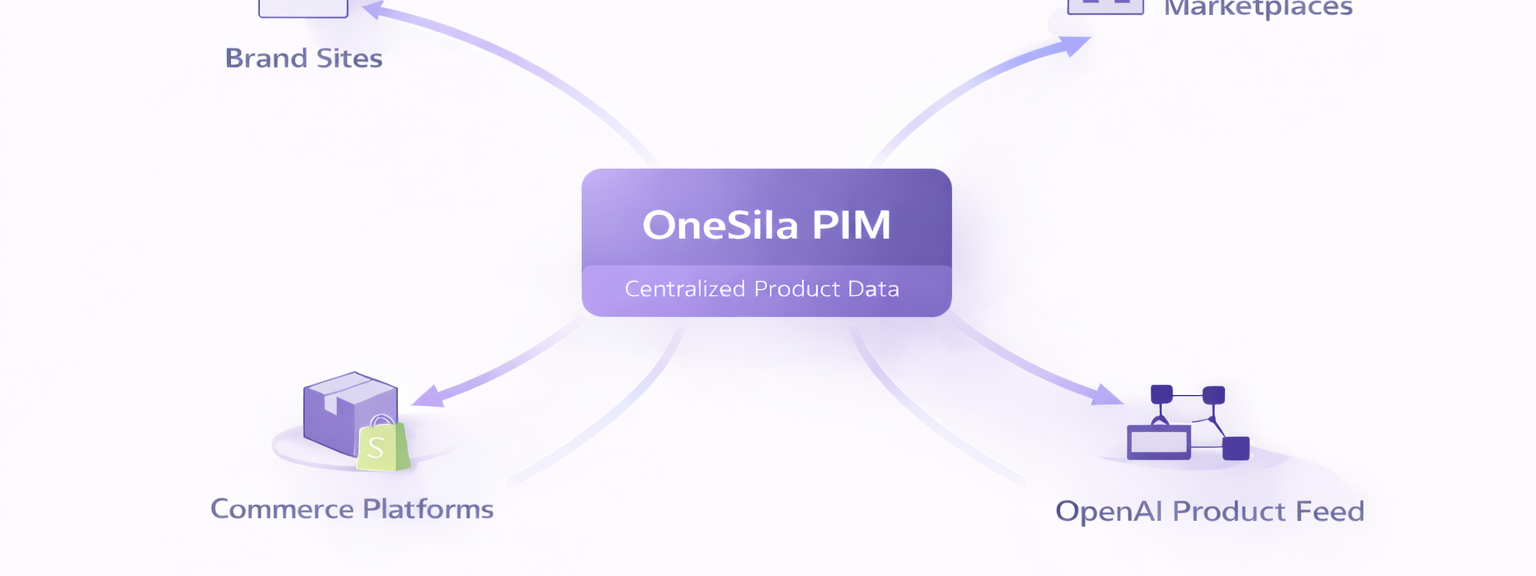
- one central place for all product information
- changes made once, reflected everywhere
- channel requirements enforced before publishing
- clear visibility into product readiness
This is where a dedicated PIM layer becomes essential.
Where OneSila fits
OneSila was built for this exact stage of growth.
It doesn’t replace ERPs, marketplaces, or webshops.
It sits between them, managing, validating, and distributing product data in a structured way.
The goal isn’t automation for its own sake.
It’s removing friction so growth doesn’t slow teams down.
Final thought
In most multi-channel setups, the real constraint isn’t the marketplace.
It’s how product data is managed across systems.