
PIM vs DXP at a glance
| PIM | DXP | |
|---|---|---|
| Primary job | Manage product data | Manage digital experiences |
| System type | Source of truth | Presentation layer |
| Owns | Attributes, specs, media, translations | Websites, content, personalisation |
| Used daily by | Product, e-commerce and catalog teams | Marketing and web teams |
| Typical buyer | Brands selling on 2+ channels | Enterprises running many sites and portals |
| Examples | OneSila, Akeneo, inRiver | Adobe, Sitecore, Optimizely, Liferay |
| Typical cost | Hundreds to thousands per month | Tens of thousands to millions per year |
You're already in eCommerce, but confused?
If you have worked in e-commerce for years and still don't quite get what a DXP is, you are not the problem. The category is genuinely confusing, and it pays to know why.
DXP is what enterprise CMS vendors became when the CMS label got too small. Around 2018, analysts started grouping suites like Adobe Experience Manager, Sitecore and Liferay under a new name: Digital Experience Platform. Same core products, bigger promise. A CMS manages a website. A DXP claims to manage every digital touchpoint: sites, portals, apps, campaigns, personalisation, analytics. The category was born from vendors expanding, not from buyers asking for a new tool. That is why every DXP seems to do everything and no two DXPs do the same things.
Here is the test that cuts through it. Ask what the system is the source of truth for. A PIM is the source of truth for product data. A DXP is not the source of truth for anything. It is the layer that presents what other systems know: products from the PIM, stock from the ERP, customers from the CRM. Useful at enterprise scale. Expensive everywhere else.
if your digital presence is a webshop and some marketplaces, you already have an experience layer. You do not need to buy one. What product businesses often miss, sits one step earlier in the chain, and it is the data, not the experience.
What is a DXP?
A Digital Experience Platform is a suite of tools for building and managing digital experiences: websites, customer portals, landing pages and campaigns. A typical DXP bundles a CMS, personalisation, A/B testing, analytics and marketing automation into one platform.
The category grew out of enterprise CMS vendors expanding their products. Adobe Experience Manager, Sitecore, Optimizely and Liferay are the best-known names. DXPs are built for organisations that run many sites, in many markets, with large content and marketing teams.
For the full picture, see our guide: What is DXP?
What is a PIM?
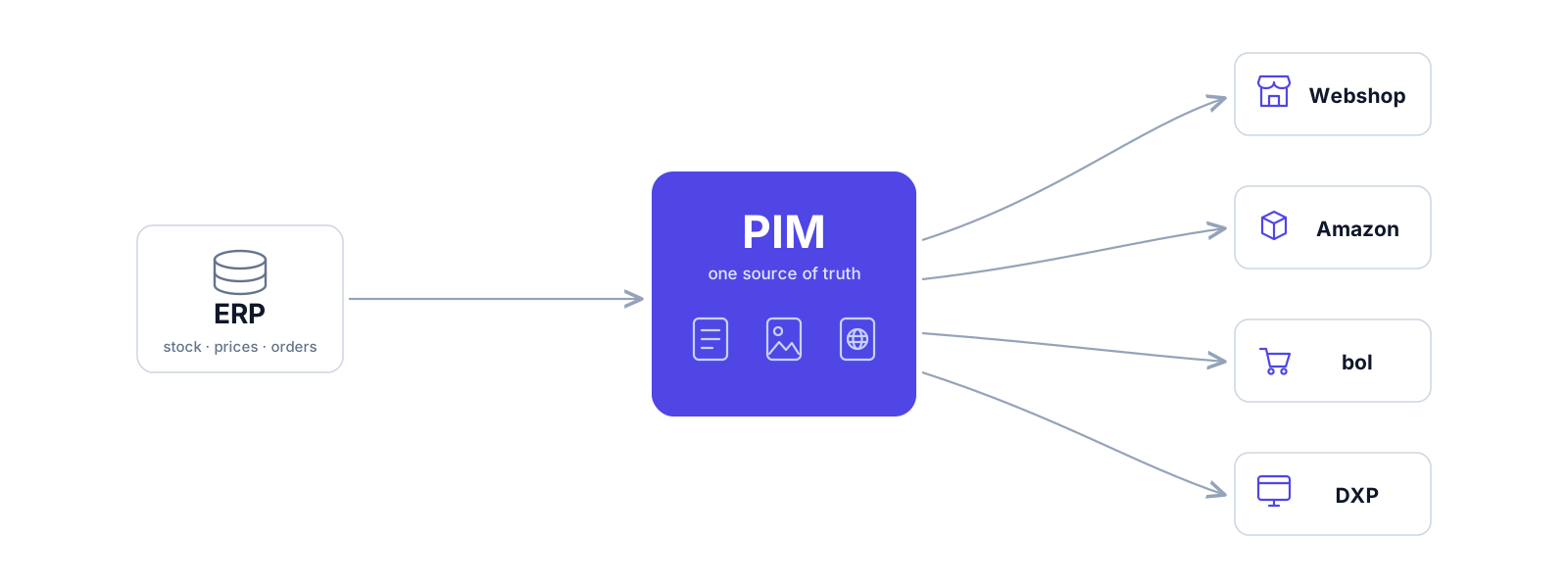
A PIM is software that stores all your product information in one central place and publishes it to every sales channel. Product data flows in from your ERP, suppliers and teams. The PIM validates it, stores one master version, and pushes the right format to each channel: webshop, Amazon, bol, retail partners.
A PIM is not a content or experience tool. It is a data tool. Its job is that every channel shows the same correct product information.
Full guide: What is PIM?
Where a PIM fits in a DXP architecture
Think of it as a supply chain for product content:
ERP → PIM → channels (webshop, marketplaces, DXP)
The ERP holds logistics data: stock, prices, order history. The PIM enriches that skeleton into sellable content: descriptions, images, translations, channel-specific formats. The experience layer sits at the end and presents it. For some companies that layer is a DXP. For most e-commerce companies it is a webshop plus marketplaces.
The two systems never compete for the same job. A DXP without a PIM behind it displays whatever product data someone typed into it, with no validation and no single master version. A PIM without a DXP still publishes perfectly to webshops and marketplaces. One is plumbing for truth, the other is staging for experience.
Do you need a PIM, a DXP, or both?
You sell products on a webshop and marketplaces. You need a PIM. Your webshop and the marketplaces already are your experience layer. What you are missing is the single source of truth feeding them. This is most e-commerce brands, distributors and manufacturers. A DXP would add cost without fixing the actual problem: scattered, inconsistent product data.
You run many content-heavy sites in many markets. You may need a DXP. Think enterprises with dozens of branded sites, portals and campaign platforms, and the team to run them. If those sites also sell products, you still need a PIM behind the DXP. The DXP does not manage product data at scale; it consumes it.
You are choosing between them with one budget. Fix truth before experience. Personalisation and testing multiply whatever data you feed them, including the errors. In practice that means the PIM comes first, and a PIM such as OneSila then feeds validated product data to whichever experience layer sits in front, whether that is a webshop, a marketplace or a full DXP.
FAQ
What is the difference between PIM and DXP?
A PIM manages product data as a single source of truth, while a DXP manages digital experiences such as websites, content and personalisation. The PIM feeds correct product data to channels. The DXP presents content and experiences to customers.
Does a DXP include a PIM?
Most DXPs do not include a full PIM. Some offer basic product catalog features, but they lack the validation, enrichment workflows and marketplace syndication of a dedicated PIM. Enterprises typically run a PIM alongside the DXP as its product data source.
Does a DXP replace a PIM?
No. A DXP presents content; it does not manage product data at scale. Companies that replace a PIM with DXP content tools end up maintaining product information by hand in every experience, which recreates the problem a PIM exists to solve.
Can you use a PIM without a DXP?
Yes, and most companies do. A PIM publishes directly to webshops, marketplaces and retail partners. A DXP is only needed when an organisation runs many content-heavy sites and portals that justify a dedicated experience platform.
What comes first, PIM or DXP?
PIM first. An experience platform amplifies whatever data it receives, including errors. Fixing the product data source before investing in experience tooling is cheaper and delivers value on the channels you already have.