In over 5 years of developing PIM systems and offering support and consultancy, we noticed a few things we wanted to share.
Most of the teams we work with are ecommerce or product teams, usually between 3 and 8 people.
And even at that size, communication issues show up constantly. Not every day, but easily 2 to 3 times per week.
A lot of the issues that end up in support can actually be solved within the team. Information is spread across multiple team members, and many times just having a more structured way to communicate would help teams achieve their goals without constantly relying on support.
We tried to identify the main time consumers that prevent better communication and problem solving within teams and address them in our Collaboration feature.
1. Switching between tools
You ask something in a Teams group, but you only give the product name. The other person tries to find it, but maybe there are multiple products with similar names.
If you give the SKU, that helps, but they still need to go to the listing, search, identify the product and the issue.
Best case scenario you send the URL, but when you have multiple issues and a group full of links it quickly becomes confusing for everyone involved.
Even simple questions become slower than they should be because people need to rebuild context every time.
2. Targeting the right people
These Teams or Telegram groups are usually used for multiple purposes, with multiple issues happening at the same time.
Even if only 2 or 3 people are involved, everyone gets notified.
We’ve seen cases where:
- someone asked about eBay errors that only one person in the team really understood
- someone new in the team was confused about rule configuration, while 2–3 people could have helped directly
- conversations that should have been between 2 people ended up happening in a group
You end up tagging entire groups for problems that only require one specific person, and the rest of the team gets distracted for no reason.
3. Interruptions vs focused work
Even for the people involved, you get tagged and don’t know the urgency.
You stop what you are doing, lose focus, and even for a minor issue you lose time twice:
once when you read the message and interrupt your work, and again when you try to get back to it.
These are silent time consumers that are hard to measure but easy to feel.
Especially when they happen multiple times per week.
A simple approach
Having this in mind, we came up with a simple solution.
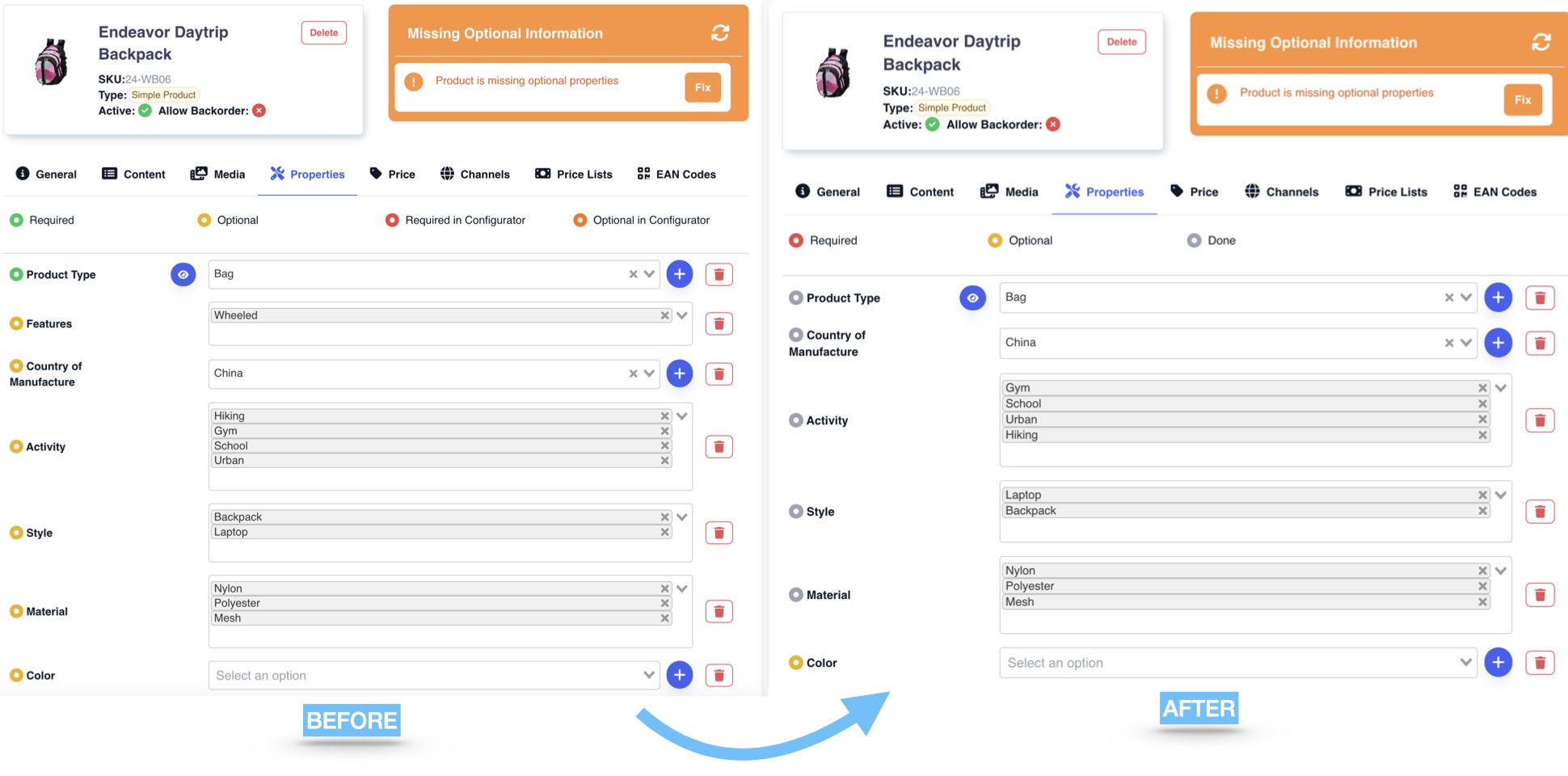
The Collaboration section is directly inside the app, available on every page.
Product, property, mapping, anything.
You tag someone and when they open the notification, they are already at the source of the issue.
No more searching by name, SKU or links.
No rebuilding context.
No dead time.
You only tag the people involved.
If you have a problem pushing a product on eBay, you ask the person who used to do it and knows all the details. The rest of the team is not involved.
Structured, but not intrusive
What we like most is that it removes the pressure of immediate responses and allows for a more structured way of working.
You continue what you are doing, see the notification, finish your work and then respond.
It’s still visible for others if they want to check it later, even months after, but it doesn’t interrupt their work in the moment.
Why inside the PIM?
Because context matters.
In chat tools, you always have to explain the problem first.
Here, the problem is already there.
And while it works like a group in terms of visibility, only the people involved are actually affected.